What is the meaning of the Ankh | Egyptian Cross?
Answer: The Ankh is one of the most conspicuous images from old Egypt, known as "the key of life" or the "cross of life", and dating from the Early Dynastic Period (c. 3150 - 2613 BCE). It is a cross with a loop at the top sometimes ornamented with symbols or decorative flourishes but most often simply a plain gold cross. The symbol is an Egyptian hieroglyph for "life" or "breath of life" (`nh = ankh) and, as the Egyptians believed that one's earthly journey was only part of an eternal life, the ankh symbolizes both mortal existence and the afterlife. It is one of the most ancient symbols of Egypt, often seen with the djed and was symbols, carried by a multitude of the Egyptian gods in tomb paintings and inscriptions and worn by Egyptians as an amulet.
The ankh's association with the afterlife made it an especially potent symbol for the Coptic Christians of Egypt within the 4th century CE who took it as their own. This use of the ankh as a logo of Christ's promise of everlasting life through belief in his sacrifice and resurrection is likely the origin of the Christian use of the cross as a logo of religion today. the first Christians of Rome et al used the fertility symbol of the fish as an indication of their faith. they might not have considered using the image of the cross, a widely known variety of execution, any longer than someone today would favor to wear an amulet of an electrical chair. The ankh, already established as a logo of animation, leant itself easily to assimilation into the first Christian faith and continued as that religion's symbol.
Origin & Meaning:
The origin of the ankh is unknown. The Egyptologist Sir Alan H. Gardiner (1879 - 1963 CE) thought it developed from a sandal strap with the highest loop going around one's ankle and also the vertical post attached to a sole at the toes. Gardiner came to his conclusion because the Egyptian word for "sandal" was "nkh" which came from the identical root as "ankh" and, further, because the sandal was a daily a part of an Egyptian's life and also the ankh symbol came to symbolize life. This theory has never gained wide acceptance, however.
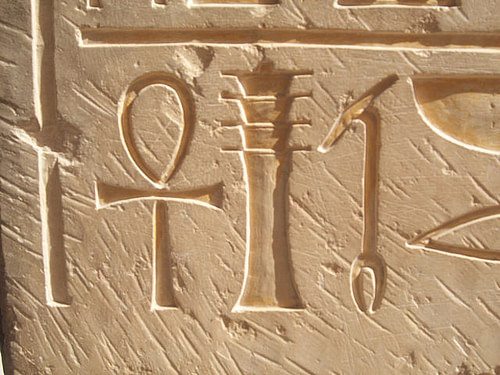
The theory of Egyptologist E.A. Wallis Budge (1857-1934 CE), who claims it originated from the buckle of the goddess Isis, is taken into account more probable but still not universally accepted. Wallis Budge equated the ankh with the tjet, the "knot of Isis", a ceremonial girdle thought to represent private parts and symbolizing fertility. This theory, of the ankh's origin stemming from a fertility symbol, is keep with its meaning throughout ancient Egyptian history and beyond to the current day. Egyptologist Wolfhart Westendorf (b. 1924 CE) supports Wallis Budge's claim noting the similarity of the ankh to the tjet and therefore the use of both symbols from an early date in Egypt's history. The ankh has always been related to life, the promise of life eternal, the sun, fertility, and light. Scholar Adele Nozedar writes:
The volume of meaning that can be squeezed from such a simple symbol is awe-inspiring. The ankh represents the male and female genitalia, the sun coming over the horizon, and the union of heaven and earth. This association with the sun means that the ankh is traditionally drawn in gold - the color of the sun - and never in silver, which relates to the moon. Putting aside the complexities of these separate elements, though, what does the ankh look like? Its resemblance to a key gives a clue to another meaning of this magical symbol. The Egyptians believed that the afterlife was as meaningful as the present one and the ankh provided the key to the gates of death and what lay beyond (18).
For more details visit MajesticVUE. Thank You!
Comments
Post a Comment